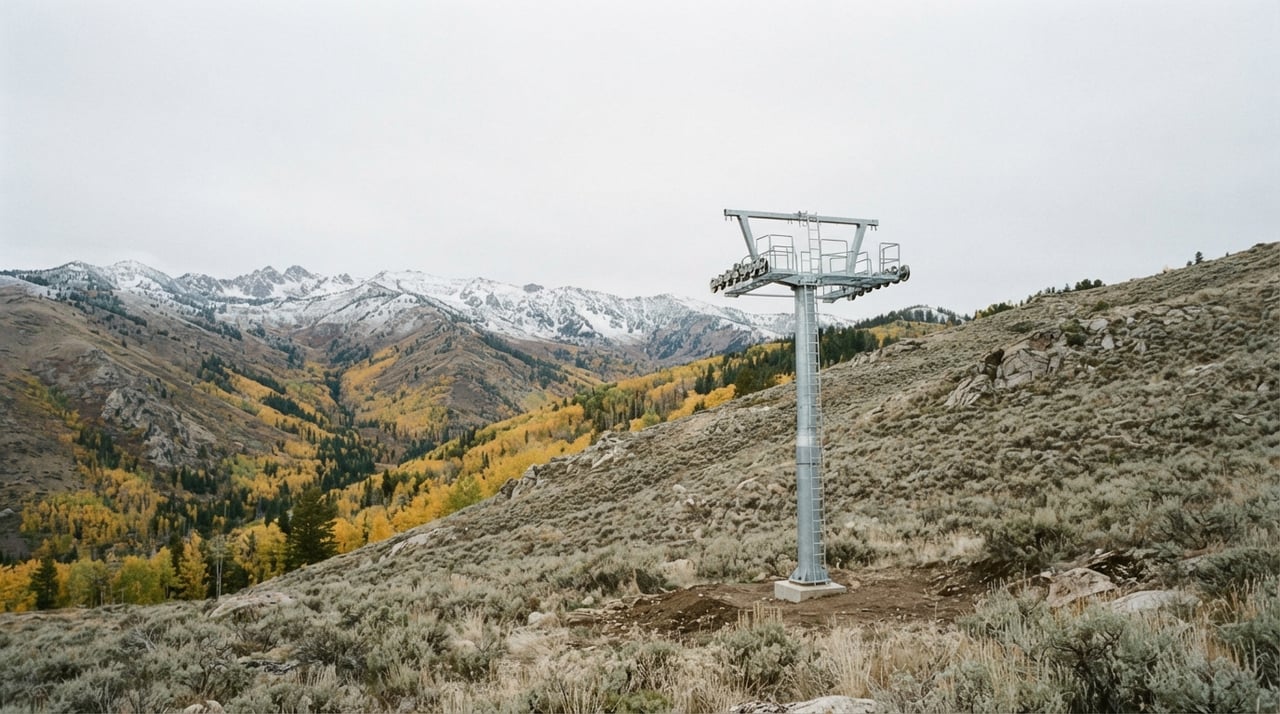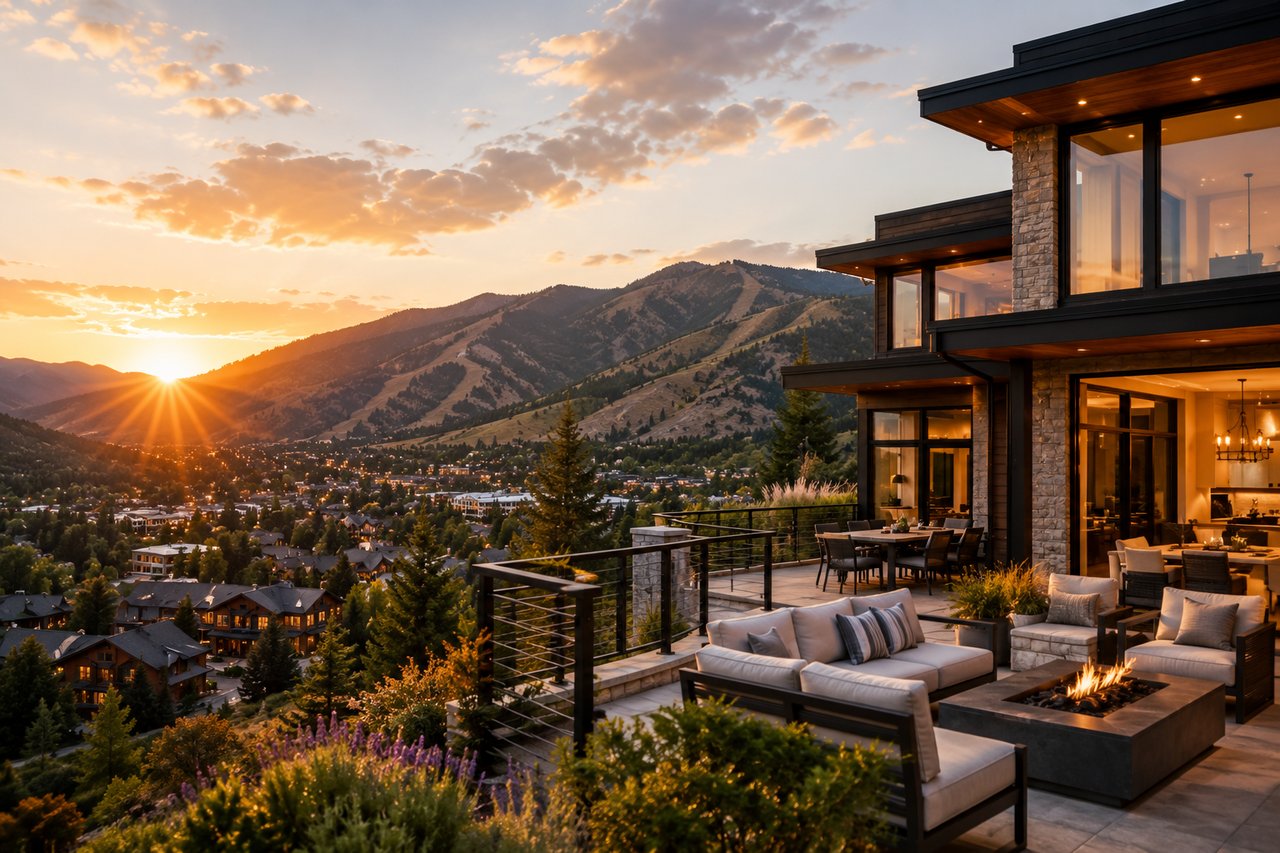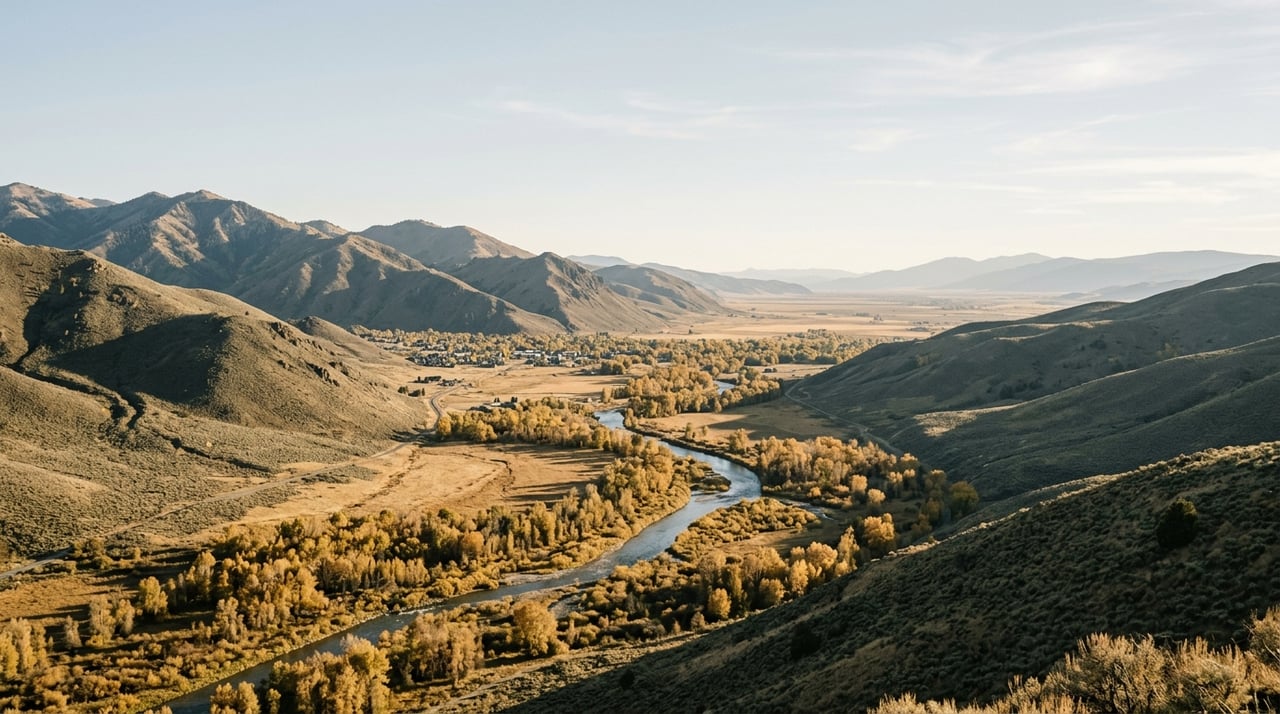
By the middle of October, the valley exhales. The summer crowds have thinned, the sheep have made their way down Ketchum's Main Street and back out toward the desert, and the pace that makes this place feel like a secret again settles back in. After twenty-six years of selling real estate here, I've come to read this quiet as a kind of honesty. It's the season when the market stops performing for an audience and shows you what it actually is.
This year, what it's showing is two different markets wearing the same autumn. Drive from Sun Valley down to Bellevue and you pass through two stories that don't quite match — and the difference matters if a move has been anywhere in your thinking.
What does the "quiet season" usually mean for Sun Valley real estate?
The Wood River Valley runs on a rhythm most resort towns share: a loud summer, a quieter shoulder season through the fall, then the build toward ski season. Business owners feel it first — valley leaders have noted the familiar fall slowdown in sales after several busier years, and Sun Valley's local-option tax receipts softened slightly in August. The quiet is normal. What's different this year is that it isn't landing evenly.
Why is up-valley still so tight?
Up-valley — Sun Valley, Ketchum, Warm Springs, Elkhorn — the story is scarcity. Through the first eight months of the year, according to a Sun Valley Sotheby's market summary, the number of homes for sale across the valley was running lower than a year earlier rather than building, which is the opposite of what you'd normally expect heading into the quiet months. The pull was sharpest at the core: Sun Valley and Ketchum single-family inventory were down meaningfully year over year through late summer, and Ketchum homes were selling at roughly 97% of list price — closer to asking than they were a year ago.
Sellers up here have held their prices, and the buyers who are in the valley have been meeting them. There's no fire-sale energy at the top of this market. If anything, the quiet is working in sellers' favor: fewer buyers around, but the ones who are here tend to be serious, and there isn't much for them to choose from.
Where does the fall buyer actually have leverage?
Down-valley tells almost the reverse. In Hailey especially, more homes have come to market through the year while the pace of sales has eased — which means a buyer there has something that's genuinely scarce up north: room. Room to take a breath, to ask for a little on price or terms, to not feel like the decision has to happen tonight.
That's the practical takeaway. The leverage a buyer has been waiting for this fall probably isn't in Sun Valley or Ketchum — it's more likely down-valley, or in a specific home anywhere in the valley that's been sitting a little too long. Same county, same month, two very different negotiating tables.
How do higher mortgage rates change the picture here?
What's pulling those two stories further apart is the cost of money. The average 30-year mortgage rate climbed to 7.40% in mid-October — its highest since late 2023 — after the Federal Reserve raised its benchmark rate in September rather than cutting it.
Here's why that lands so unevenly in this valley. At the higher end up-valley, a large share of second-home buyers simply aren't borrowing. Nationally, well over half of vacation-home purchases are made entirely in cash, and that share runs higher still in a market like ours. A rate at a three-year high barely registers for a cash buyer on Elkhorn Road. Down in Hailey, where more buyers are financing a primary home, that same number is the whole conversation. One market is insulated from rates almost entirely; the other feels every basis point.
What should you do if you're weighing a move this fall?
I'm not going to tell you this is "the time to buy" or "the time to sell." That line is almost always selling something, and the honest answer depends entirely on which of these two valleys you're standing in and what you're trying to do.
If you're a seller up-valley, the scarcity is real — but so is the smaller pool of buyers, which makes pricing it right the first time matter more than it has in a few years. A thin market rewards a home that's positioned correctly on day one and quietly punishes one that's chasing last year's number.
If you're a buyer, the leverage is more likely down-valley this fall, or in a specific listing that's lingered. The discipline is knowing the difference between a home that's priced to sit and a home that's priced to move.
None of this is a forecast. It's what the quiet is showing right now, and it reads far more clearly for a specific street or a specific home than for a whole valley. If you're trying to figure out which of these two Octobers your own property is in, that's a good conversation to have before the snow flies and the market changes its clothes again.
FAQ
Is fall a good time to buy a home in Sun Valley? It depends where in the Wood River Valley you're looking. Heading into fall 2026, up-valley markets like Sun Valley and Ketchum have stayed tight, with limited inventory and homes selling close to asking. Down-valley, Hailey has more homes on the market and a slower sales pace, which tends to give buyers more room to negotiate.
Are home prices dropping in Sun Valley? Not at the upper end. Through the first eight months of 2026, up-valley inventory was tight and sellers largely held their prices. The clearer softening has been down-valley, where more supply has met fewer sales. Confirm current figures with up-to-date MLS data before making a decision.
Do higher mortgage rates affect the Sun Valley luxury market? Less than you'd think at the top end. A large share of second-home and luxury buyers here pay cash, so a 30-year rate near 7.40% has limited effect on that segment. Rates matter much more for financed, primary-home purchases down-valley.
Should I wait until after ski season to list my home? There's no single right answer. A tight up-valley market can favor a well-priced listing even in the quiet months, while timing around ski season is one factor among many. The better question is how your specific property and price point are positioned right now.
Sources
- 30-year fixed mortgage rate (7.40%, week of Oct. 15, 2026; highest since late 2023): Freddie Mac Primary Mortgage Market Survey — https://www.freddiemac.com/pmms
- Federal Reserve benchmark rate increase to 3.75%–4.00% (Sept. 16, 2026): Federal Reserve FOMC statement, September 2026
- Share of vacation-home purchases made in cash (more than half): National Association of REALTORS® second-home/vacation buyer data, 2026
- Valley by-town inventory and sale-to-list figures (year-to-date through August 2026): Sun Valley Sotheby's International Realty market summary (Summer Baldwin), Sept. 3, 2026 — competitor-brokerage compilation, derived from MLS; named not linked per sourcing policy; confirm against current FlexMLS data
Market data is approximate and subject to revision. This article is general commentary, not financial, legal, tax, or individualized real estate advice.