Homeowners insurance used to be one of the last things a buyer thought about. You arranged it somewhere in the days between inspection and closing, alongside the title work and the wire instructions, and it was rarely more complicated than a phone call.
In this valley, treating it that way has become a genuine risk.
The problem isn't only what coverage costs. It's whether a particular property can be covered at all, by anyone, at any price — and that question has a way of surfacing at day twenty-five of a thirty-day escrow, when your earnest money is committed and your options have narrowed to bad ones.
How difficult has insurance become in Blaine County?
Difficult enough that the state has been tracking it.
Idaho Department of Insurance figures reported in February 2026 counted 22 of the state's 91 homeowners carriers as having either exited the Idaho market or begun non-renewing policies since 2023. Statewide, the average homeowners premium rose from $1,308 in 2022 to $1,798 in 2024 — an increase of roughly 37% over two years.
Those are statewide numbers, and I want to be careful not to let them stand in for local ones. The local picture is narrower and sharper.
Three Blaine County ZIP codes — covering Sun Valley, Ketchum, and Hailey — ranked among Idaho's five most expensive for average homeowners premiums in 2024, with averages ranging from $3,896 to $6,840 depending on the ZIP. Separately, a U.S. Senate Budget Committee analysis of insurance non-renewal rates between 2018 and 2023 placed Blaine County 93rd out of more than 3,000 counties nationally.
One caveat worth stating plainly: the most recent comprehensive figures available are from 2024. Two years is a long time in this particular market, and the direction of travel has not been toward more availability. Treat these as the floor of the problem rather than its current shape, and get current quotes rather than relying on any published average.
Why is this happening here specifically?
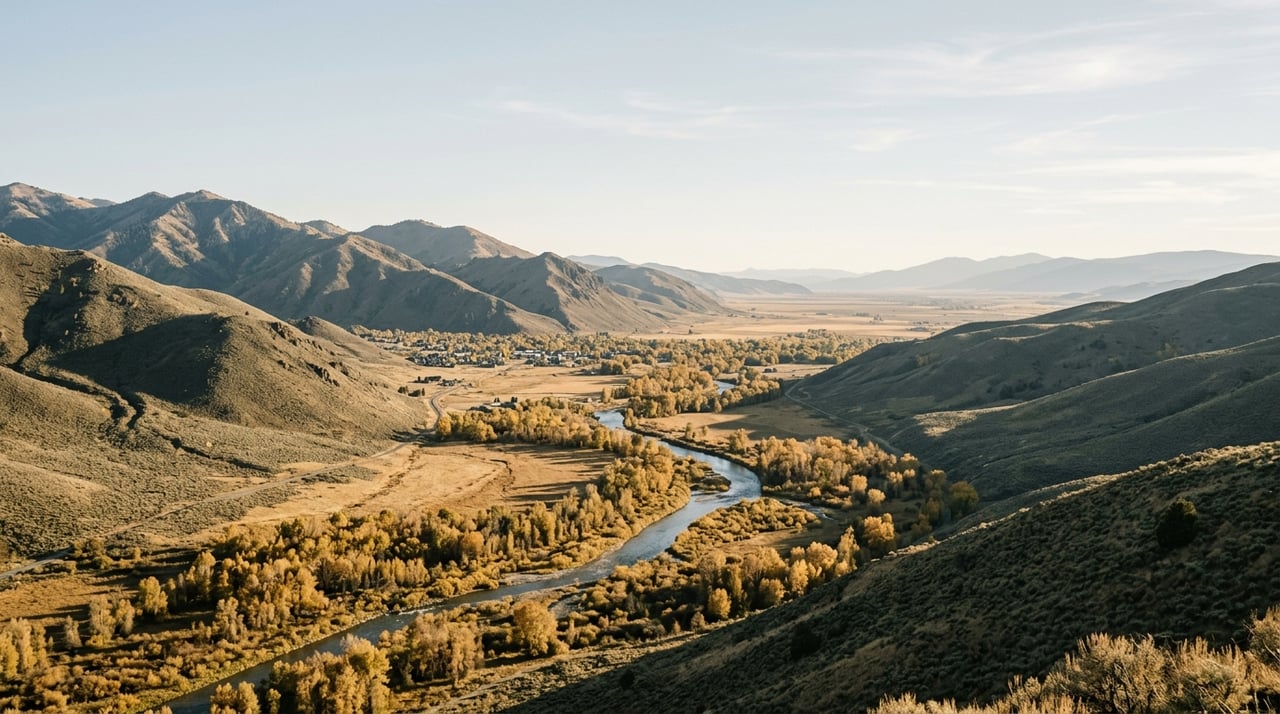
Because most of the desirable inventory in this valley sits in what insurers call the wildland-urban interface — the zone where private structures meet undeveloped land that can carry fire.
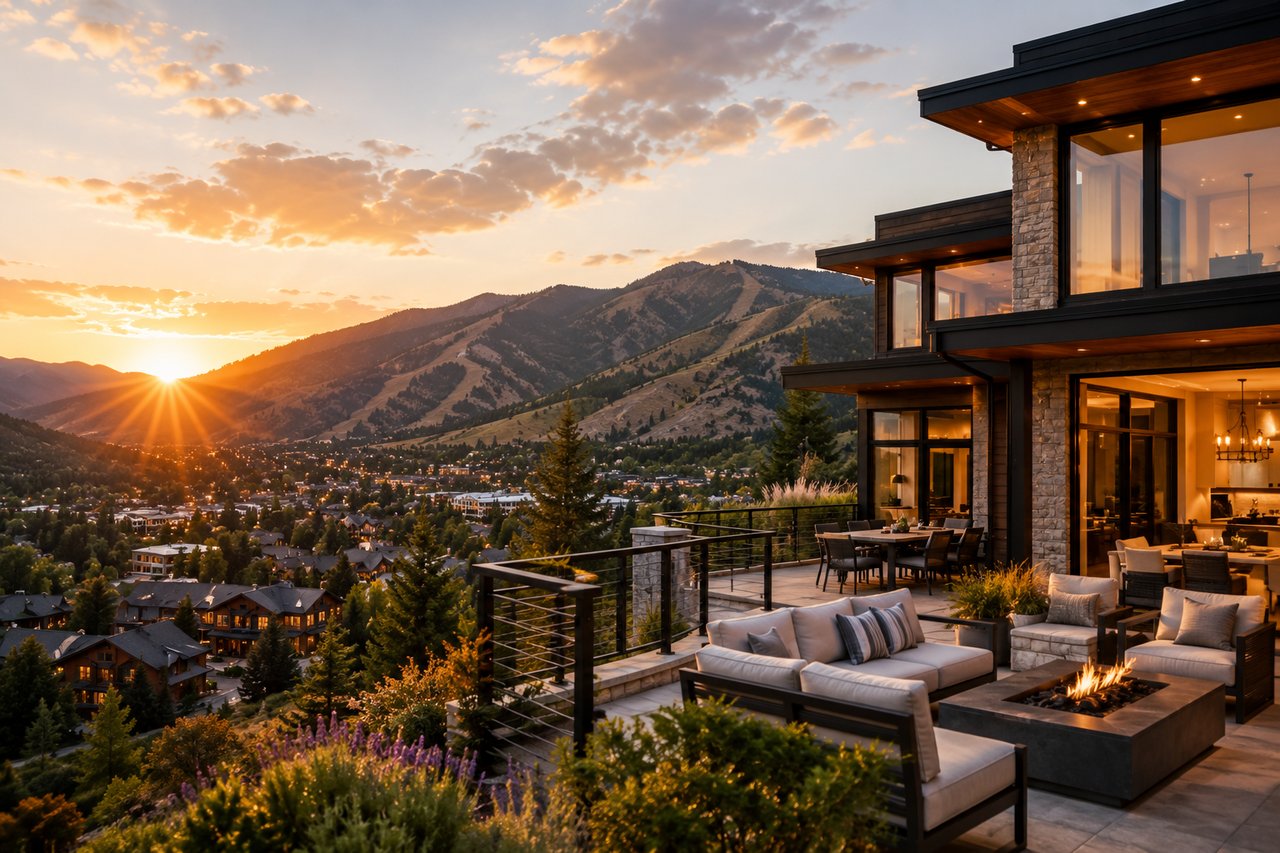
That adjacency is much of what people are buying. The trailhead at the end of the road, the aspen stand behind the house, the open sage hillside that will never be built on. Those features are the reason a property commands what it commands, and they are simultaneously the reason an underwriter may decline it.
You cannot separate the two. Anyone who tells you a Blaine County property carries no wildfire consideration is either uninformed or selling you something.
The valley had two fires this summer that stayed small and were handled well. The Martin Fire burned roughly 1,065 acres about two miles east of Bellevue before containment in mid-July, started by fireworks. The Cabin Creek Fire near Alturas Lake reached seven acres and was fully contained by around July 22, caused by an unattended campfire.
Both were minor outcomes. Both were also human-caused, in July, in a valley whose insurers are watching.
What does Idaho not have that other states do?
This is the part most out-of-state buyers don't know, and it matters more than the premium figures.
Idaho has no FAIR plan — no state-backed insurer of last resort for property owners who cannot obtain coverage in the private market. States like California and Florida maintain that kind of backstop precisely because private carriers retreat from high-risk areas. Idaho does not.
If you're coming from California, this is the specific assumption to discard. There is no state pool waiting behind a decline here. The private market either writes the risk or it doesn't, and if it doesn't, your remaining options are surplus lines carriers at surplus lines pricing, or no purchase.
An Idaho Mountain Express report on the issue quoted the practical consequence directly: "People can't sell properties because new buyers can't find coverage."
That sentence describes a transaction failing. It's worth reading twice, because the buyer in that scenario did everything in the normal order and still lost the house.
When should you actually check?
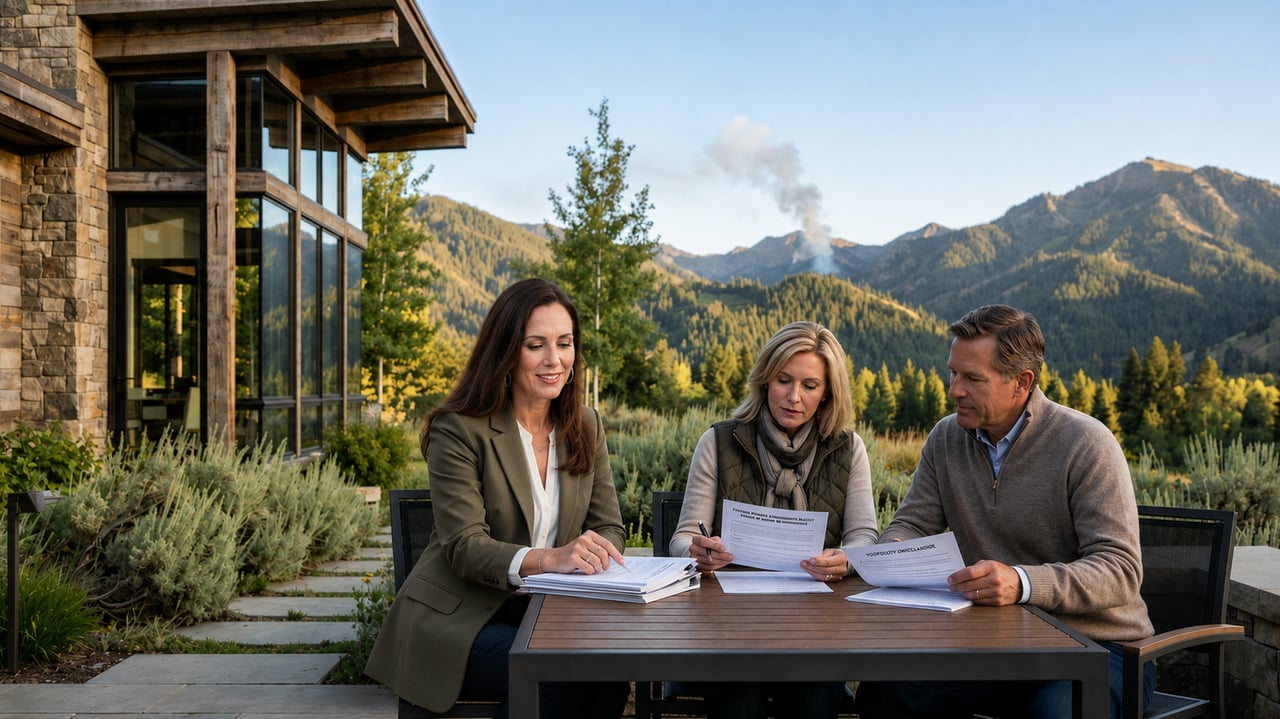
Before you write the offer. Not during the inspection period, and not after.
The failure mode is predictable enough to describe without a specific case. A buyer does everything in the conventional order — offer, inspection, appraisal, insurance last — and discovers at day twenty-something that the property has a coverage history they weren't told about. By then the earnest money is committed, the rate lock is running, and the choice is between a premium that breaks the model and walking away from money already spent. Nothing about that sequence involves anyone behaving badly. It's just the wrong order of operations for this market.
If pre-offer isn't practical in a competitive situation, then insurability belongs at the very top of your inspection-period list, on day one, ahead of the things that are merely expensive to fix. A failed roof is a negotiation. An uninsurable property is not a purchase.
What should you ask?
Seven things, in this order:
- Ask the seller who carries the policy, what it costs, and whether they have received a non-renewal notice. The answer to the third question is the one that matters most.
- Get a quote in your own name before you offer. Underwriting is buyer-specific and property-specific. The seller's experience is data, not a guarantee.
- Ask specifically whether any carrier has declined the property, not just what it currently costs to insure.
- Ask what mitigation would change the answer — defensible space clearing, roof class, ember-resistant vents, deck materials. Sometimes the property is insurable after work that a seller may be willing to negotiate.
- Find out whether the quote is from an admitted carrier or surplus lines, and what that difference means for coverage limits, claim protections, and future renewals. Have a licensed insurance agent explain it rather than taking a summary.
- If it's a condominium, separate the HOA master policy from your unit policy and understand exactly where one ends and the other begins.
- Put the real premium into your carrying-cost model, not a placeholder. On a valley property, the difference between an assumed figure and an actual one can be several thousand dollars a year.
Doesn't the seller's policy just transfer?
No, and this is a common and expensive misunderstanding.
A homeowners policy is a contract between the insurer and that owner. It doesn't convey with the property. You will be underwritten on your own, and a seller who has held a policy through twenty years of renewals may be carrying legacy pricing and legacy tolerance that a new applicant simply will not be offered on the same house.
The house isn't insurable. An owner is insurable, for a house. Confirm the specifics with a licensed insurance professional — I'm describing why to ask the question, not answering it for your situation.
The part worth remembering
Insurance in this valley has moved from a closing formality to a diligence item, and the buyers who get hurt by that are the ones who find out on the old schedule.
None of this is an argument against owning here. It's an argument for a different order of operations. Front-loaded, insurability is a question with an answer — sometimes yes, sometimes yes after mitigation, occasionally no, and any of those is useful information while you can still act on it. Discovered late, it becomes the reason a purchase falls apart.
The process change is small and it happens early: insurance moves from the closing checklist to the pre-offer conversation. That's it. Front-loaded, insurability is a question with an answer you can act on. Left to the end, it's the thing that decides whether you own the house.
If you're evaluating a property in the valley this fall, the insurance conversation belongs at the beginning of your diligence rather than the end of your escrow.
This is general market information, not insurance, investment, tax, or legal advice. Coverage availability and terms are specific to each property and applicant. Consult a licensed Idaho insurance professional before relying on any of the above.
FAQ
Will installing a metal roof or clearing defensible space actually get me insured?
Sometimes, and it depends on the carrier and the property. Mitigation measures that carriers commonly weigh include roof class, ember-resistant vents, deck and siding materials, and the cleared distance around the structure. Ask a licensed agent what specific work would change a specific carrier's answer before you spend money on the assumption that it will.
Can I get coverage through a surplus lines carrier if I'm declined?
Often yes. Surplus lines carriers write risks that admitted carriers decline, at higher cost and sometimes with narrower coverage and fewer state protections. It is a real option rather than a last resort, but the terms differ meaningfully from a standard policy and warrant a line-by-line review.
Does a mortgage lender require coverage even on a cash-heavy purchase?
Any financed purchase will require coverage as a condition of closing, which is why an insurance problem can stop a transaction outright rather than just making it more expensive. An all-cash buyer has more latitude to proceed uninsured or underinsured, though doing so on a wildland-adjacent property is a substantial risk to carry personally.
SOURCES
- Idaho Department of Insurance — homeowners market data, carrier exits and non-renewals
- U.S. Senate Budget Committee — insurance non-renewal analysis, 2018–2023
- Idaho Mountain Express, "Living with fire: How to stay insured"
- Boise State Public Radio — reporting on Idaho insurance market conditions
- Valley Lookout, February 2, 2026 — reporting on Blaine County premium data
Premium and non-renewal figures reflect Idaho Department of Insurance data through 2024, the most recent comprehensive figures available as of this writing. Fire acreage and containment figures reflect July 2026 local reporting. Conditions change; verify current figures and obtain current quotes before relying on any of the above.