A few years ago, many people questioned whether San Francisco would fully reclaim its position at the center of luxury real estate momentum.
In 2026, that question has largely disappeared.
The city isn’t just recovering.
It’s accelerating.
And much of that acceleration is being driven by one force reshaping nearly every conversation in the Bay Area right now:
Artificial intelligence.
Across San Francisco’s most established luxury neighborhoods, a new wave of wealth creation is moving through the market with remarkable speed. Founders, early employees, venture-backed executives, and AI investors are re-entering the housing market aggressively—often with liquidity events, stock-driven capital, and a willingness to move quickly.
The result?
Luxury inventory is tightening.
Competition is intensifying.
And in select neighborhoods, bidding wars have returned faster than many expected.
The Return of Urgency in San Francisco Luxury Real Estate
For much of the past few years, San Francisco buyers operated cautiously.
Today, the tone feels very different.
Luxury homes in:
- Pacific Heights
- The Marina
- Noe Valley
- Presidio Heights
- Russian Hill
…are once again attracting:
- pre-emptive offers
- all-cash buyers
- multiple-offer situations
- shorter days on market
What’s notable isn’t just the pricing.
It’s the urgency.
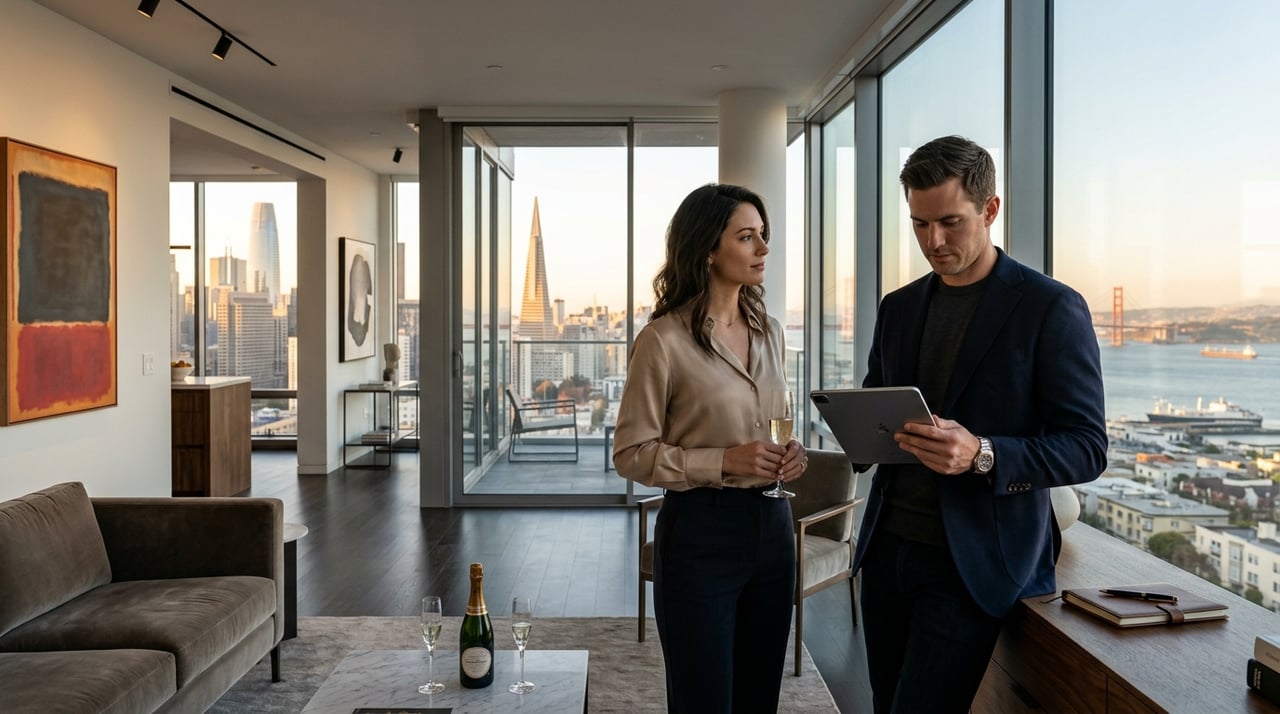
I recently toured a fully renovated property in Pacific Heights that quietly came to market midweek.
By the weekend, there were multiple private showings scheduled back-to-back. One buyer flew in from Los Angeles. Another arrived directly from a conference tied to an AI infrastructure company.
By Monday morning, the home had multiple offers—two of them all cash.
That pace would have sounded aggressive even eighteen months ago.
Now, it’s becoming increasingly familiar.
Why AI Wealth Is Impacting Real Estate So Quickly
The Bay Area has always been deeply connected to innovation cycles.
But the AI wave is moving differently.
Unlike slower corporate expansion cycles, AI wealth creation is happening rapidly:
- startup valuations are climbing quickly
- acquisition activity is accelerating
- liquidity events are occurring earlier
- venture capital deployment remains strong
And much of that capital is staying local.
That matters for real estate.
Because unlike broader consumer markets, luxury housing responds directly to concentrated wealth creation.
In neighborhoods like Pacific Heights and the Marina, buyers are increasingly:
- less rate-sensitive
- more focused on lifestyle positioning
- willing to compete aggressively for turnkey homes
This is especially true for properties that offer:
- architectural significance
- privacy
- walkability
- views
- and move-in-ready condition
Pacific Heights Is Leading the Momentum
Few neighborhoods reflect this shift more clearly than Pacific Heights.
The demand profile here has intensified considerably in 2026, particularly for homes between $5M and $15M.
Buyers want:
- scale
- views
- design quality
- proximity to the city’s north-end lifestyle
And importantly, many want homes that require little to no renovation.
That last point matters.
Today’s affluent buyers increasingly value immediacy over projects. They want a home that supports their lifestyle now—not after twelve months of construction timelines and permit delays.
As a result, premium pricing for fully renovated inventory continues expanding.
The Marina and Noe Valley Are Seeing a Different Kind of Buyer
While Pacific Heights attracts ultra-luxury capital, neighborhoods like the Marina and Noe Valley are seeing a slightly different dynamic emerge.
Here, the buyer profile skews younger:
- startup founders
- AI engineers
- newly liquid executives
- tech professionals upgrading lifestyle
Many are purchasing their first truly significant property.
And unlike previous cycles, these buyers are prioritizing:
- neighborhood experience
- walkability
- wellness
- architectural style
- indoor-outdoor living
The result is strong demand for:
- modernized single-family homes
- luxury condos with outdoor space
- properties near restaurants, parks, and retail corridors
In many ways, this is redefining what luxury means in San Francisco.
All-Cash Transactions Are Becoming More Common
One of the clearest signs of this market shift is the growing prevalence of all-cash purchases.
In higher-end segments, cash buyers now represent a meaningful share of activity.
That creates several downstream effects:
- faster closings
- stronger negotiating leverage
- more aggressive bidding environments
- increased pressure on financed buyers
For sellers, this environment rewards thoughtful positioning and strategic timing.
For buyers, preparation matters more than ever.
Inventory Remains the Defining Constraint
Even as demand rises, inventory across San Francisco’s luxury market remains relatively constrained.
And that imbalance is amplifying competition.
Well-positioned homes are moving quickly because:
- buyers are ready
- supply remains limited
- and confidence at the top of the market has returned
This is particularly true in neighborhoods where:
- architectural inventory is limited
- renovation quality varies widely
- and lifestyle proximity drives value
What This Means for Buyers
If you’re entering the San Francisco luxury market in 2026, the landscape has changed.
Success increasingly depends on:
- preparation before inventory appears
- strong local market intelligence
- understanding neighborhood-level dynamics
- moving decisively when the right property surfaces
Waiting for “more inventory” may not create the advantage buyers expect.
What This Means for Sellers
For sellers, the current environment presents a unique opportunity.
The strongest outcomes are happening when:
- pricing is disciplined
- presentation is elevated
- and homes launch strategically
Today’s buyers are sophisticated, well-capitalized, and highly selective.
But when the right property appears, they move quickly.
The Bigger Picture
What’s happening in San Francisco isn’t simply a housing story.
It’s a reflection of how AI is reshaping wealth, migration, and lifestyle priorities across the Bay Area.
And increasingly, luxury real estate is becoming one of the clearest places to see that transformation in real time.
Final Thought
The San Francisco luxury market in 2026 feels fundamentally different than it did even a year ago.
Confidence has returned.
Competition has intensified.
And AI-driven wealth creation is accelerating the pace of the market faster than many anticipated.
The buyers moving into Pacific Heights, Noe Valley, and the Marina aren’t just purchasing homes.
They’re positioning themselves inside the next chapter of the Bay Area’s economic story.